
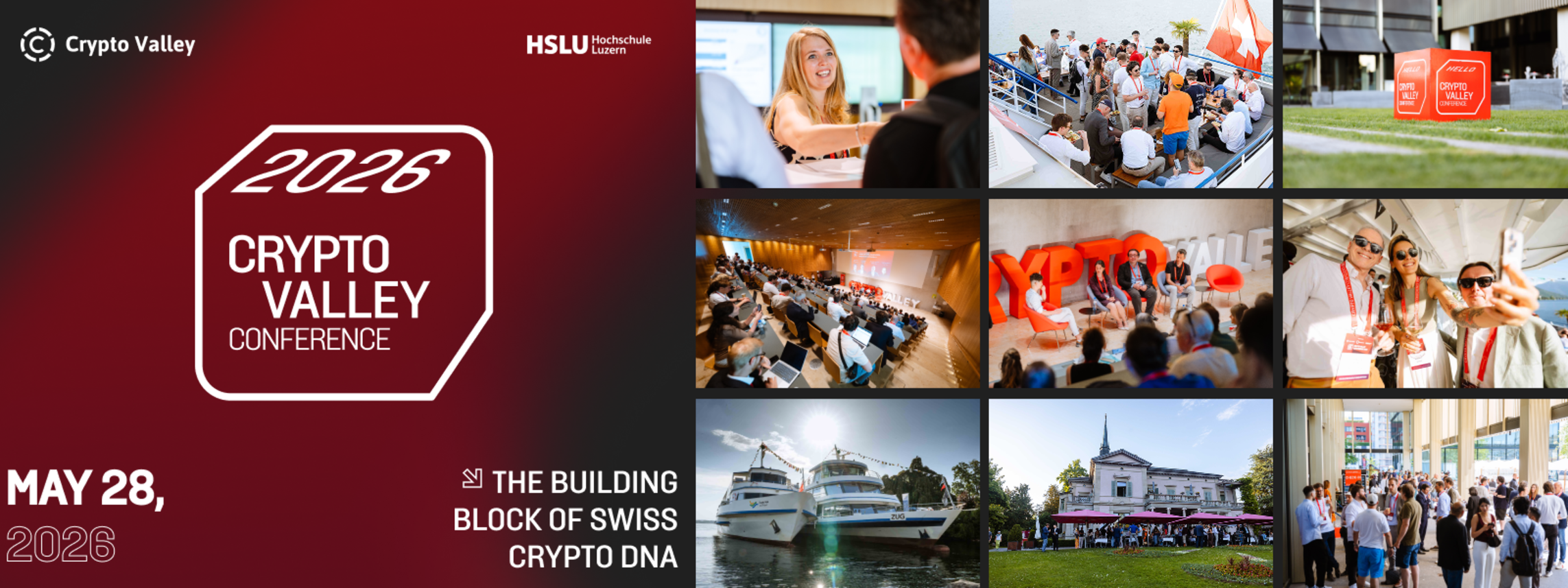
CVC26: The 8th Crypto Valley Conference Recap
Is Switzerland still the place where the future of digital finance gets written?
On May 28, the industry answered that question inside Hochschule Luzern in Rotkreuz, Zug.
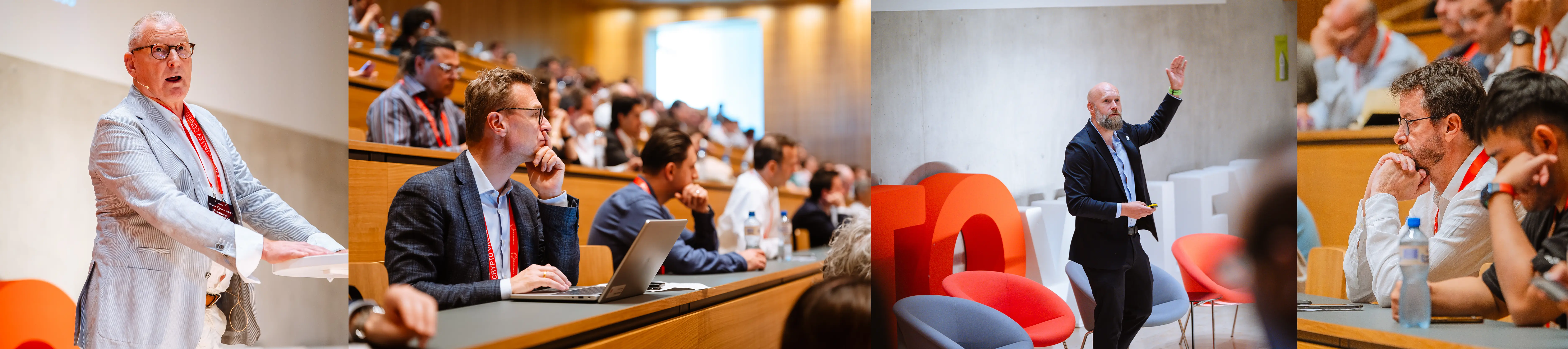
Some of the most consequential voices in blockchain, institutional crypto, and Web3 infrastructure gathered for the 8th edition of the Crypto Valley Conference, covering the themes that are defining the next chapter: quantum-resistant infrastructure, AI's role in geopolitics, real-world asset tokenization, the rise of institutional capital in digital markets, and the regulatory architecture that makes Switzerland the jurisdiction where builders stay.

Setting the Stage: Eight Years of Building Something That Lasts
CVC has never been a spectator event. Since its first edition, it has operated from a single premise: that the decisions shaping the global digital asset industry are made by the people in that room. The 8th edition arrived at a moment when that premise has become harder to argue against.
Jerome Bailly, President of the Crypto Valley Association, opened the day by framing the gathering not as a milestone, but as a continuation of something deliberate.
Niki Csanyi, Executive Director of the CVA, reflected on what distinguishes CVC from the wider conference circuit: "What makes CVC special is the combination of people and purpose. The audience doesn't come to observe. They come to move things forward."
The co-organizer Hochschule Luzern, whose academic partnership with the CVA gives CVC its distinctive mix of research rigour and real-world market insight, once again provided the setting for a day where the agenda moved between institutional strategy, technical depth, and regulatory clarity without losing its thread.

Quantum Security: The Clock Is Ticking, Even If the Threat Isn't Here Yet
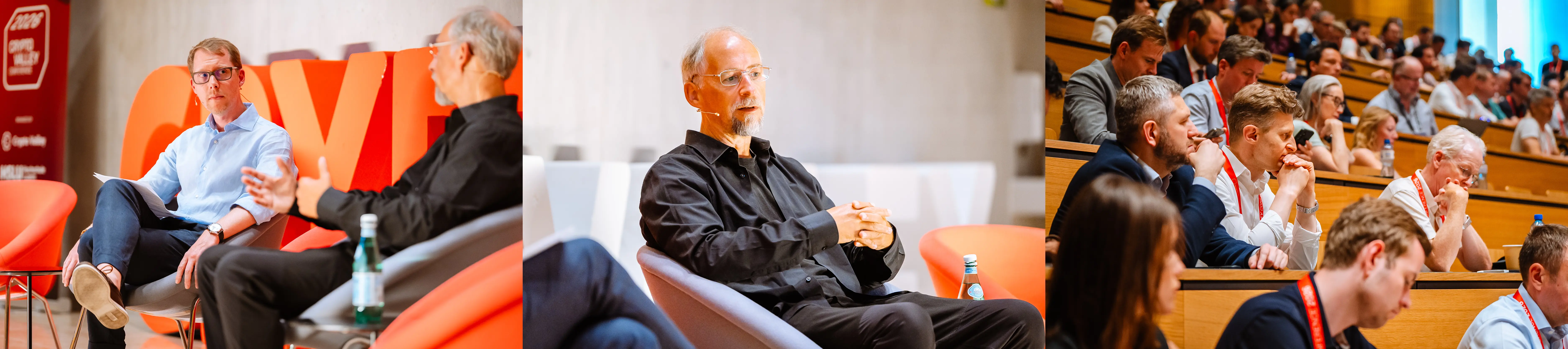
Back's argument was precise: quantum computers do not yet pose a practical threat to Bitcoin or to cryptographic infrastructure more broadly. Current systems remain, in his words, lab experiments operating far below the threshold required to break real-world encryption. But that is not a reason for inaction. It is a reason for a structured, unhurried migration toward quantum-resistant systems, one that gives holders, custodians, and institutions time to move without emergency coordination.
Blockstream's own research team has been working on post-quantum approaches for years, with implementations already tested on Liquid, Bitcoin's Layer 2 network. The EU's own PQC Migration Roadmap, requiring Member States to define national quantum-resistance roadmaps by the end of 2026, makes clear that this is no longer a theoretical conversation.
The discussion in the room extended beyond Bitcoin. For institutions holding digital assets at scale, for infrastructure providers, and for the regulatory frameworks being designed in Switzerland and Brussels alike, the message was consistent: the migration window is open. The question is whether the industry uses it deliberately or scrambles when the window closes.
AI and Geopolitics: When Technology Becomes a Geopolitical Variable
The intersection of artificial intelligence and geopolitics has moved from think-tank speculation to operational reality faster than most predicted. At CVC26, we examined not the abstract potential of AI, but its concrete implications for digital asset infrastructure, financial sovereignty, and the competitive positioning of jurisdictions.
The conversations addressed how AI is reshaping the intelligence capacity of nation-states, the degree to which blockchain infrastructure has become a geopolitical asset, and what the concentration of AI capability in a small number of jurisdictions means for decentralized systems that were designed to resist exactly that kind of concentration.
For Switzerland specifically, the questions are practical: how does a jurisdiction that has built its value proposition on regulatory clarity, political neutrality, and institutional trust navigate a world where the tools underpinning finance are increasingly entangled with questions of national security and strategic competition?
The Ethereum Origin Story, Retold in the City Where It Happened
Few moments at CVC26 carried the weight of context that Mihai Alisie's presence did. As a co-founder of Ethereum, Alisie is among the small group of people who made the original decision to build in Zug, a decision that, more than any other single choice, established Switzerland as the home of the global blockchain ecosystem.
His appearance at CVC26 was a reminder that the Crypto Valley identity is documented history. The whiteboards from the early days in Zug, the Ethereum Foundation's roots in Switzerland, the regulatory bet that Zug's authorities took on a group of builders that nobody else was willing to house, all of it traces directly to decisions made in this region, in a moment when the industry did not yet have a name.
Alisie's conversation at CVC26 connected that founding moment to the present, and raised the question that matters most for the next chapter: what happens when the next generation of foundational infrastructure gets built, and who decides where that happens?
Institutional Capital and RWA Tokenization: From Pilot to Infrastructure
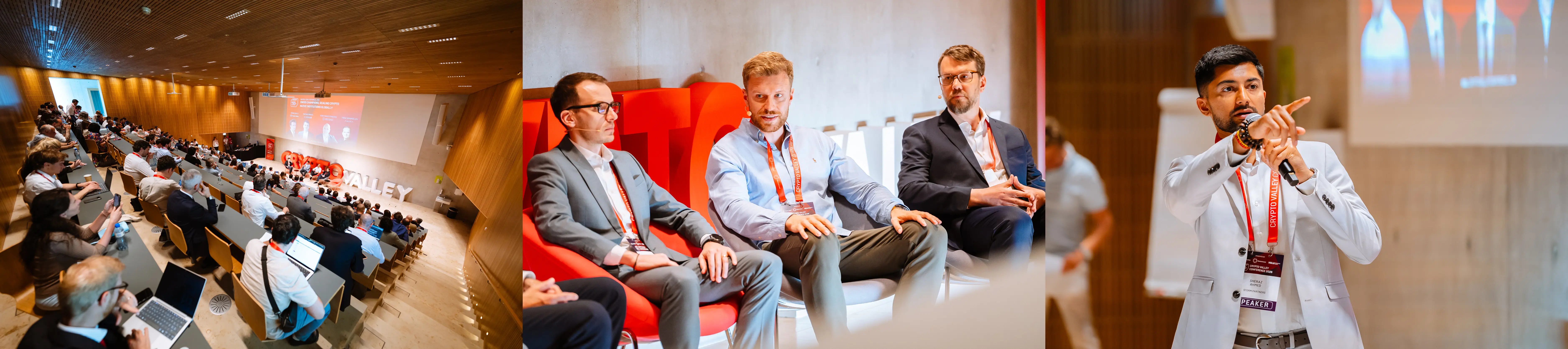
The theme that ran most consistently through CVC26's afternoon sessions was the maturation of institutional participation in digital assets. The institutions present at CVC26 (from Sygnum and AMINA Bank to Crypto Finance (Deutsche Börse Group), Tether, and Mastercard) are operating in a market where digital assets contribute measurably to revenue and where the infrastructure questions have shifted from "should we?" to "how do we scale this?"
Mathias Imbach, Co-Founder and Group CEO of Sygnum, and Franz Bergmüller, CEO of AMINA Bank, both addressed the structural shift underway in regulated digital asset banking. The conversation has moved from custody and access to yield generation, portfolio integration, and cross-border settlement efficiency.
Francesco Ranieri Fabracci, Head of Tokenization Expansion at Tether, addressed the RWA tokenization landscape directly. The tokenization of real-world assets, from bonds and real estate to commodities and private credit, is producing a new class of financial infrastructure that sits between traditional capital markets and on-chain liquidity. Switzerland, with its combination of regulatory clarity under DLT legislation, established financial institutions with digital asset mandates, and a dense ecosystem of specialist service providers, is positioned to capture a disproportionate share of that market.
Dorothea Ysenburg, Vice President of Global Partnerships for Digital Assets and Blockchain at Mastercard, brought the enterprise perspective: at the scale Mastercard operates, the questions are about interoperability, compliance, and the reliability of the infrastructure beneath the product. The signals from institutions at that scale matter, because they define where the market goes next.

Regulation as a Competitive Advantage: Switzerland's Deliberate Edge
Heinz Tännler, former Finance Director of the Canton of Zug and one of the architects of Switzerland's early embrace of the blockchain industry, participated in a conversation that addressed what has become one of the most important strategic questions in the global digital asset market: which jurisdictions will lead, and which will follow?
Switzerland's answer has been consistent since the early days of Crypto Valley. The country made a deliberate choice to engage with the industry before the regulatory frameworks existed elsewhere, to build those frameworks in dialogue with the industry rather than in opposition to it, and to establish Zug as the jurisdiction where serious builders receive the conditions they need.
The result is not just a concentration of companies. It is a concentration of institutional knowledge, legal precedent, regulatory infrastructure, and human capital that is genuinely difficult to replicate. As MiCA reshapes the European regulatory landscape and other jurisdictions accelerate their own frameworks, Switzerland's advantage is not just what its rules say. It is how long the country has been practicing.
Frederik Gregaard, CEO of the Cardano Foundation, addressed the relationship between regulatory clarity and protocol development. For Layer 1 infrastructure at scale, the ability to engage with regulators who understand the technology is not a minor operational convenience. It is a prerequisite for institutional adoption.
The Tenity StableHacks Grand Finale: Innovation on Stage
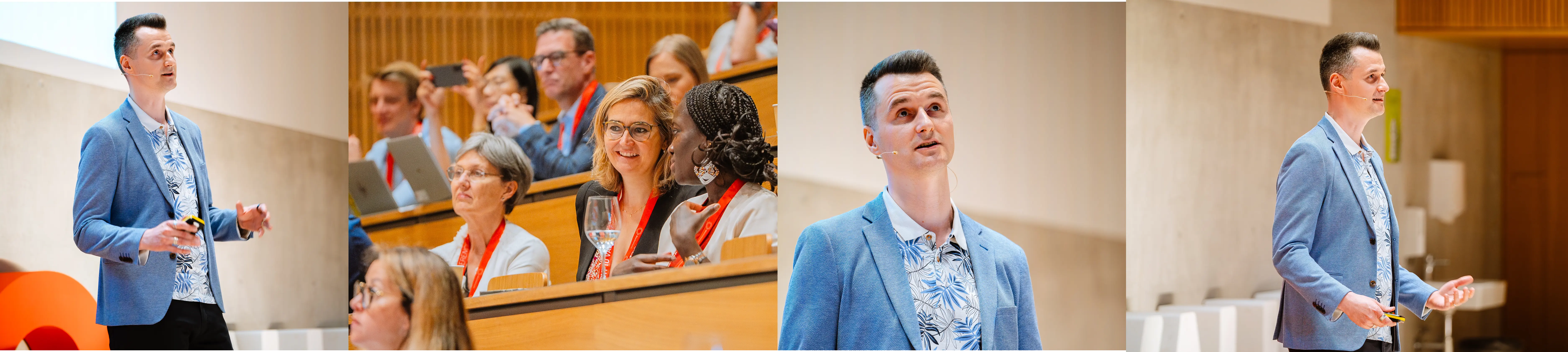
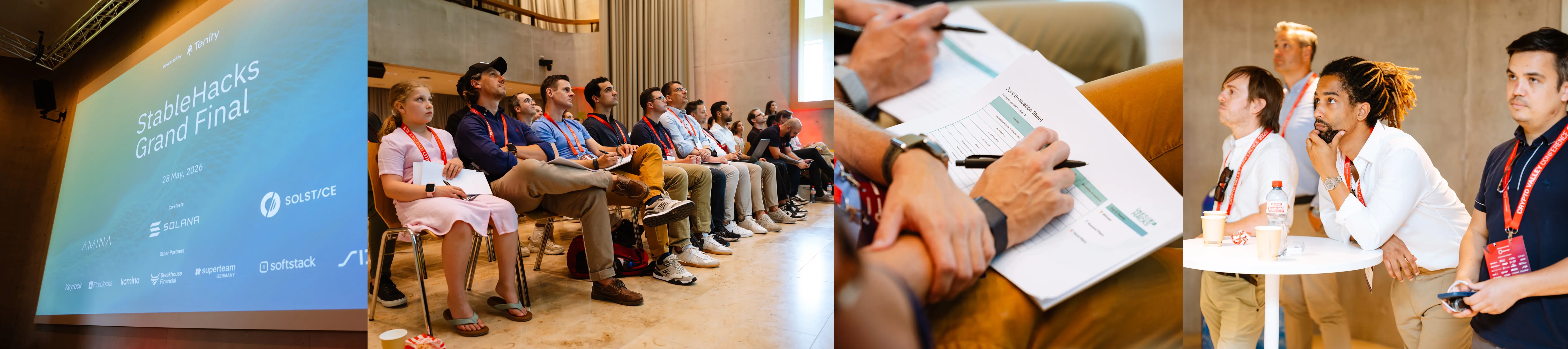
One of the defining moments of CVC26's format, the point where the conference showed its commitment to the next generation of builders, not just the established players, was the Tenity StableHacks Grand Finale. Ten teams, each building next-generation stablecoin infrastructure on Solana, competed for a live jury verdict in front of the full CVC audience.
The combination of live product demonstrations and immediate evaluation by a jury of industry practitioners produced something that most conferences fail to generate: genuine uncertainty about the outcome, and genuine consequence for the builders on stage.
Beyond the Stage: Where CVC Really Happens
The Binance Institutional Breakfast, which opened the day from 8:30 AM, set the tone for the quality of the off-stage conversations. In a format that kept institutional participants and digital asset leaders in the same room for three hours before the main programme began, the morning session produced the kind of introductions and alignment that are difficult to manufacture in any other context.

The CVC26 Networking Lunch, hosted by SIX, brought the full audience together with the energy that has become a CVC signature, a mid-day moment where the density of the room makes chance encounters as valuable as scheduled ones.

And the day closed the only way it should: the Sunset Boat Cruise on Lake Zug, a CVC tradition since 2018 hosted by Blockstream. For attendees who have been coming to CVC across multiple editions, the boat cruise is where the conversations that started inside continue across the water, in a setting that is specific to this place and to what it represents.

What CVC26 Said About the Industry
The digital asset industry in 2026 is debating scale, infrastructure, and competitive positioning. The institutions in the room are attending to determine how to build, integrate, and grow within an ecosystem that has already established its foundations.
Switzerland's role in that ecosystem is the product of deliberate choices made over eight years: by the CVA, by the Canton of Zug, by the companies that chose to build here and stayed, and by the regulators who chose engagement over exclusion.
Crypto Valley Conference is where Switzerland's crypto identity takes shape.
The 8th Crypto Valley Conference was organised by the Crypto Valley Association and Hochschule Luzern. Presenting Partner and Boat Cruise Host: Blockstream. Event Partners: Bitcoin Suisse, G-20 Group, Binance, Cardano Foundation, Crypto Finance, SIX, Sygnum, Tenity, NEAR, Solana Foundation, Talos, Komainu, MME, Luzerner Kantonalbank, Lockton, DGLD, Zama, and more.